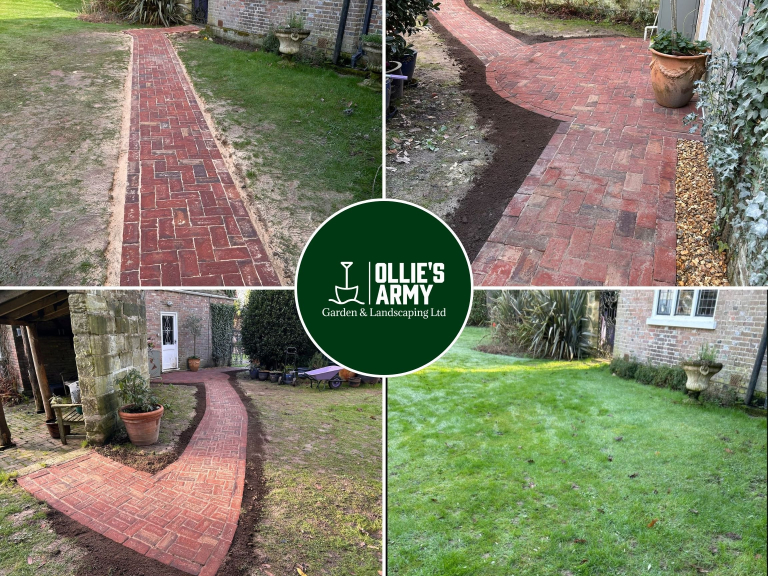
Autumn is a good time to take a closer look at how your garden copes with wet weather. A lawn that looked healthy throughout summer can quickly become muddy, pathways can turn slippery, and areas that seemed perfectly usable a few months ago may start collecting standing water.
For homeowners in Eastbourne, preparing a garden for winter isn't just about clearing leaves and cutting back plants. It's also about understanding where problems are likely to develop and what you can do before they become more difficult to manage.
At Ollie's Army Garden & Landscaping Ltd, we know that a garden needs to work for you throughout the year, not just when the sun is shining. Here are some things worth checking as the wetter months arrive.
One of the first signs that a garden is struggling with wet weather is a lawn that stays soft and muddy long after the rain has stopped.
You might notice:
Puddles forming in the same places after heavy rainfall.
Grass becoming thin or worn in regularly used areas.
The ground feeling unusually soft or spongy underfoot.
Mud being carried into the house whenever somebody crosses the garden.
Some lawns simply need a little extra attention. Removing fallen leaves, reducing foot traffic while the ground is saturated and improving compacted areas can all help.
However, if the same sections of your lawn become waterlogged year after year, there may be an underlying drainage issue.
What to consider: Look at where the water gathers and how long it takes to disappear. If the problem keeps returning, it's worth understanding why before spending money on replacement turf or other improvements.
It might sound obvious, but one of the most useful things you can do during heavy rain is look at where the water actually goes.
Does it run naturally towards a lower part of the garden? Collect beside a patio? Remain trapped against a pathway? Or flow towards the house?
Standing water can develop for several reasons, including compacted soil, poorly draining ground, low spots or surfaces that don't direct water away effectively.
Not every puddle means you need a major drainage project. Some disappear naturally as the ground dries out. But water that repeatedly collects in the same place, particularly near buildings, deserves attention.
What to consider: Before adding a new patio, path or lawn, think about how the changes will affect water movement. Good landscaping isn't just about how the finished garden looks. It's also about making sure the different elements work together.
Paths, steps and patios are easy to overlook until the weather turns wet.
Leaves, algae, moss and general surface dirt can make outdoor areas slippery, particularly where they receive little sunlight or remain damp for long periods.
Keeping these areas clear and cleaning them using methods suitable for the paving material can help reduce the risk of slips.
It's also worth checking for:
Uneven or loose paving slabs.
Areas where water regularly pools.
Worn or damaged steps.
Paths that become difficult to use in poor weather.
Sometimes routine cleaning and maintenance are enough. In other cases, the underlying layout, paving condition or drainage may need attention.
What to consider: If a path is your main route between the house, garage or garden gate, it needs to remain practical and safe throughout the year. Improving the surface or redesigning the route could make everyday access much easier.
It's tempting to keep using the garden exactly as you would in summer, but saturated ground is much more vulnerable to damage.
Repeatedly walking across a wet lawn can compact the soil and damage the grass, particularly along frequently used routes.
If there's a shortcut across the lawn that everyone uses to reach a shed, washing line or gate, you may notice that the same muddy trail returns every winter.
Where possible, avoid unnecessary traffic over waterlogged grass and give heavily used areas a chance to recover.
But if there's a clear route that people naturally take, it may be more practical to create a proper garden path rather than continually trying to repair the lawn.
What to consider: Sometimes the problem isn't that your lawn needs more maintenance. It's that your garden layout doesn't quite match how you use the space.
Winter has a useful way of revealing which parts of a garden aren't working as well as they could.
Perhaps there's an area of lawn that never fully dries out. Maybe your existing patio is too small, or you have to walk across muddy grass to reach the shed.
These aren't always problems that can be solved with a quick tidy-up.
Depending on the garden, improvements might include:
Creating properly constructed paths between frequently used areas.
Replacing difficult-to-maintain sections of lawn with more practical surfaces.
Improving patio areas and considering how rainwater drains away.
Reworking garden levels where appropriate.
Introducing raised beds or defined borders.
Planning a wider garden renovation that addresses several problems together.
The important thing is to look at the whole garden rather than treating each muddy patch or puddle as a separate issue.
A well-planned outdoor space should be attractive, practical and suited to the way you actually live.
You don't necessarily need to start a landscaping project immediately, but autumn and winter can be useful times to identify what isn't working.
When the weather is wet, you can see where water gathers, which paths become difficult to use and where the lawn suffers most.
That gives you a much clearer picture of what might need changing.
It also gives you time to consider your options, discuss possible improvements and plan ahead for when you want to enjoy your garden again.
Some problems can be tackled with straightforward maintenance. Others may benefit from professional landscaping advice, particularly where drainage, paving or changes to the garden's layout are involved.
A little preparation now can help you avoid some of the familiar frustrations of a wet winter.
Clear leaves, keep paths maintained, protect saturated lawns and pay attention to where rainwater collects. Most importantly, don't ignore problems that return year after year.
If your garden becomes muddy, waterlogged or difficult to use every winter, it might be time to consider a longer-term improvement.
Ollie's Army Garden & Landscaping Ltd helps homeowners in Eastbourne create outdoor spaces that are both attractive and practical, including patios, pathways, turfing and wider landscaping projects.
If you've noticed areas of your garden that aren't working as they should, take a look at Ollie's Army Garden & Landscaping Ltd and get in touch to discuss what you'd like to improve.