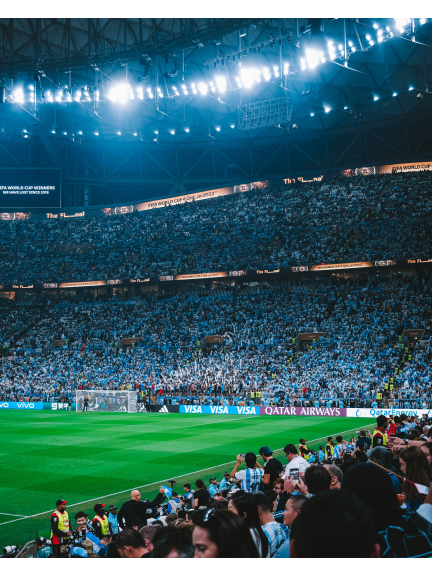
The World Cup can be a fantastic opportunity to boost workplace morale. Whether employees are following England, Scotland or another national team, major tournaments often create a real buzz in the workplace.
However, early kick-offs, late finishes and post-match celebrations can also create familiar HR issues: employees arriving late, calling in absent, or being less than match-fit the next morning.
Employers do not need to dampen the excitement. In many cases, a sensible and flexible approach can help maintain goodwill. However, it is equally important to set clear expectations and deal with any issues fairly, consistently and lawfully.
As a starting point, employees are expected to attend work on time and in accordance with their contract of employment and workplace policies. Turning up late, failing to attend work or failing to follow the organisation’s absence reporting procedure may amount to unauthorised absence or a conduct issue.
Acas guidance confirms that unauthorised absence can include lateness. Employers should also check their own policies to see how lateness, absence and disciplinary issues should be handled.
That said, employers should avoid rushing straight to disciplinary action. A one-off late arrival after a major match may be best dealt with informally, depending on the circumstances, the employee’s explanation and the impact on the business.
However, repeated lateness, failure to report absence or dishonesty about the reason for absence may justify formal action under the employer’s disciplinary or absence management procedure.
Employers should also consider whether pay is affected. Subject to the employee’s contract and any workplace policy, an employer will not usually be required to pay an employee for time they have not worked because they were late or absent without authorisation.
Many employers will find that a little planning avoids a lot of friction.
Temporary flexibility during the tournament might include:
Any arrangement should be clear, time-limited and subject to business needs. Employers should make clear that temporary flexibility is not a free pass to be unavailable, unproductive or uncontactable.
It is also important to distinguish between informal flexibility and statutory flexible working requests.
Employers and employees can agree short-term informal arrangements without using the statutory process. However, if an employee makes a statutory flexible working request, that request should be handled in accordance with the relevant legal requirements and the Acas Code of Practice.
If lateness becomes persistent, employers should deal with it promptly and consistently.
A fair approach will usually involve:
Clear policies are important. Managers should understand how to apply the relevant absence, lateness and disciplinary procedures, what records to keep, and when matters should be escalated.
Where a disciplinary process is necessary, employers should follow a fair procedure. This includes explaining the concern, giving the employee an opportunity to respond, considering any mitigation, and applying a proportionate sanction.
Consistency is also important. If one employee is warned for repeated lateness while another is ignored in similar circumstances, that can create workplace resentment and potential legal risk.
World Cup issues can also raise equality considerations.
Employers should take care not to treat employees differently because of nationality, race or ethnic origin, or because they support a particular team. Race is a protected characteristic under the Equality Act 2010 and includes colour, nationality and ethnic or national origins.
Employers should also avoid assumptions. Not every employee watching England will be English, and not every employee interested in another team should be treated less favourably.
If flexibility is offered for England matches, employers should consider whether the same approach can sensibly apply to other significant fixtures, subject to operational requirements.
Employers should also be alert to other possible explanations for lateness or absence. For example, lateness may be connected to disability, pregnancy, caring responsibilities, travel disruption, or another issue which requires careful handling. In those circumstances, employers should pause before taking formal action and consider whether further information or adjustments are required.
Employers can reduce problems by communicating expectations before the tournament starts.
A short staff message can confirm:
It is sensible to remind employees that unauthorised absence, repeated lateness or dishonesty may be dealt with under the relevant policy. At the same time, employers can encourage employees to speak to managers in advance if they want to request leave, swap shifts or adjust their hours.
Managers should also be briefed to apply the same approach across teams and keep appropriate records.
The best approach is a balanced one. Employers can acknowledge the excitement of the World Cup and support workplace morale, while still protecting attendance, productivity and fairness.
Clear communication, consistent policies and proportionate action will usually prevent minor lateness from becoming a major employment issue.
Where employers are unsure how to deal with repeated lateness, suspected dishonesty, discrimination concerns or competing flexible working requests, it is sensible to take employment law advice before taking formal action.
PCB Solicitors’ employment law team is here to help employers manage workplace issues fairly and practically.
If you are an employer and would like advice on managing lateness, absence, flexible working requests or workplace issues during the World Cup, PCB Solicitors’ Employment Team is here to help.
You can contact us by email at contact@pcblaw.co.uk, call your local PCB office, or submit an enquiry through our Contact Us page. A member of our friendly team will be happy to discuss how we can support your business.