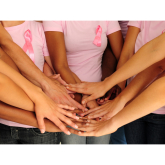
This is the beginning of a sustained, collective effort to address deep-rooted health inequalities affecting communities across Birmingham.
Held on Thursday 2nd July 2026, the event brought together partners working across City, including NHS, local government, police, universities, and voluntary, community, faith and social enterprise (VCFSE) sector organisations. Together, delegates shaped how Birmingham will deliver on its shared ambition to tackle health inequalities that have long affected communities.
The work is being developed in partnership with the Institute of Health Equity, applying the internationally recognised Marmot approach, a framework rooted in evidence and social justice, to drive transformation across the city. Across Birmingham, organisations and communities are already delivering vital work to address the social determinants that drive health inequalities. This mission builds on that foundation, bringing partners together to strengthen what is working, identify gaps, and focus collective effort on creating lasting change across the city. Birmingham’s recent designation as a Marmot Place and progress towards World Health Organisation (WHO) Healthy City status underpin this commitment.
However, the scale of the challenge is significant. Birmingham's life expectancy is below England’s, and in the most deprived areas, there is a ten-year gap in life expectancy compared to the most affluent parts of the city. Child poverty is a particular concern, with 32.5% of children in Birmingham living in absolute low-income families, rising to three in four children in the most deprived areas. Birmingham also has an unemployment rate of 7.8%, nearly double the national figure of 4.6%. From infancy to old age, the experiences of residents vary sharply across communities, shaped by social determinants including income, education, employment and access to healthcare. Structural racial inequalities, identified as a key driver of poor health outcomes, will also have a central focus.
The event celebrated the work that partners across the city are already doing and discussed the actions needed to collaboratively address inequalities. As well as participating in interactive workshops, delegates heard keynote presentations from Michael Marmot (Institute of Health Equity) and Sally Burns (Director of Public Health) on the importance of this work and what it means for the city. A panel of partners from the VCFSE discussed why health equity is important for Birmingham’s communities and reflected on what we need to do to address this. The event also marked the formal launch of the Birmingham Health Equity Network (H.E.N), a platform to share best practice, celebrate local action and align efforts across organisations.
Cllr Nosheen Khalid, Cabinet Member for Health and Social Care, said: “Birmingham has one of the youngest and most diverse populations in Europe, yet too many of our residents face stark inequalities in health, employment and opportunity. Whether that is children missing out on the best start in life, young people struggling to find secure work, or communities experiencing poorer health outcomes, we know that these inequalities are not inevitable.
“This work is about making changes for our residents now and for generations to come. By collaborating together across the city, with our communities at the heart of everything we do, we can build a Birmingham where everyone has the opportunity to thrive.”
Professor Sir Michael Marmot, Director of The UCL Institute of Health Equity, said: “Working in the UK’s second biggest city represents an exciting opportunity to improve the lives of more than one million residents by building on work in Birmingham to address health inequalities. As Birmingham is home to one of the youngest populations in Europe it will be important to work across all the Marmot eight principles to help us understand more about how the experience of childhood inequities - a well-established driver of health inequalities - go on to affect education, attainment and employment in later life.
The project is structured around two phases: an initial phase of identifying priority areas including children’s education and employment, racial inequalities, and system transformation; followed by a recommendations and implementation phase, with measurable goals designed to endure beyond the initial two-year partnership with the Institute of Health Equity.
The programme aligns closely with Birmingham’s City Vision, which sets out an ambition to improve the life expectancy of all our citizens, while closing the life expectancy gap between the least and most deprived. Birmingham's City Vision also set out an ambition to make Birmingham an inclusive city that will work with partners to define how we will become a world-leading Anti-Racist City.
Partners, organisations and individuals who want to help shape this mission are encouraged to sign up to the H.E.N platform and join the network.