When workplace wellbeing is discussed, the conversation can quickly become complicated.
Mental health initiatives, employee benefits, wellbeing programmes and formal policies all have an important role to play. But businesses can sometimes overlook the simpler things that shape how people actually experience their working day.
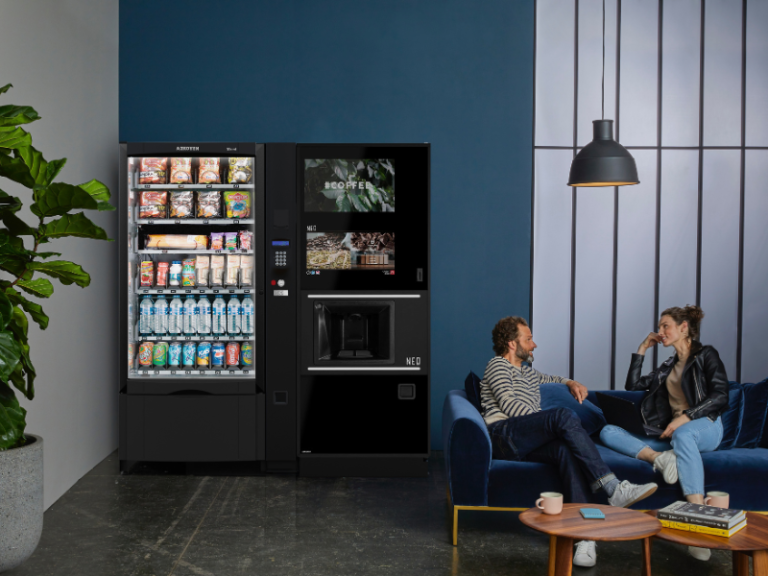
A proper break. Easy access to good-quality food and drink. Staying hydrated. A comfortable place to sit. Ten minutes away from a screen or production line to pause, reset and speak to a colleague.
These might not sound like major wellbeing initiatives, but they are part of everyday working life.
The need for businesses to take employee wellbeing seriously is clear.
Gallup's latest UK data found that 46% of employees experienced a lot of stress during the previous day in 2025, while 18% experienced loneliness. CIPD research published in 2025 also found that 23% of UK employees felt exhausted and 21% felt under excessive pressure.
These are significant challenges, and they cannot be solved by improving a staff room or installing a better coffee machine.
But that does not mean the everyday working environment is insignificant.
Wellbeing is experienced throughout the working day, not simply through a policy document or an annual initiative.
It is easy for businesses to focus on the bigger picture.
Employee engagement, absence, retention, productivity and formal wellbeing programmes can all be measured and reported. But what does an employee actually experience between those measurements?
Can they take a proper break? Is there somewhere comfortable to sit? Can they get something to eat during a long shift? Is drinking water readily available? Does the working environment encourage people to pause and interact with colleagues rather than simply work through the day?
None of these things will transform an organisation on their own. Collectively, however, they contribute to what it feels like to work there.
That matters when businesses are increasingly thinking about the relationship between employee experience, engagement and performance.
CIPD research published in 2026 found that 22% of UK employers have no set objectives for the employee benefits they provide, highlighting the importance of understanding what employees actually need from the workplace.
The answer is not to turn every workplace facility into a formal wellbeing initiative. It is to consider whether the everyday environment is helping people to have a better working day.
The workplaces that create better daily experiences are not necessarily those with the biggest budgets.
They are often the ones that recognise that people need opportunities to recharge, connect with colleagues and step away from the demands of work.
A ten-minute conversation at the coffee machine will not solve workplace stress, but it can provide a genuine pause during a busy day. Access to good food will not fix employee engagement, but it can make a long shift easier. A comfortable break area will not create a positive culture on its own, but it can provide a space where relationships develop.
The individual moments are small. Their cumulative effect can be much greater.
For leadership teams, perhaps this is a more useful question than simply asking whether a wellbeing strategy exists.
What is it actually like to work here?
The question shifts the focus from policies to experience. It considers the environment employees spend their working day in, the facilities available to them and the small moments that can make a demanding day feel more manageable.
For a manufacturing or distribution business, that might mean reliable access to food and drinks throughout long or irregular shifts. For an office, it could mean creating a comfortable space where colleagues can take a genuine break and connect.
For larger or more flexible workplaces, technologies such as Micro Markets and Smart Fridges can also provide convenient access to refreshments throughout the day without relying on traditional catering.
A refreshment solution will never be the answer to workplace wellbeing by itself. But it can be one small part of creating a workplace that demonstrates its people have been considered.
The wider wellbeing strategy still matters. Policies, mental health support and employee benefits all have an important role to play.
But perhaps businesses should also look at the smaller things that employees experience every day, around break times and refreshments. They can reveal a lot about how a workplace is designed around the people who use it.
Because employee wellbeing does not begin and end with a policy.
Sometimes, it starts with something much simpler.


